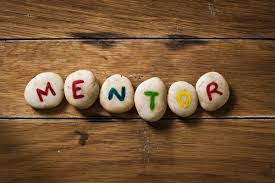
 If only I knew then what I know now…..
I think we’ve all spoken (or at least thought) these words at some time in our lives. Hindsight can be a wonderful thing and if we approach our past experiences with curiosity and a desire to learn from them, our future can be incredibly enriched. Wouldn’t it be great then, if we could learn from our experiences before they actually happened? This all sounds a bit ‘back to the future-ish’ doesn’t it? In some ways, this is what mentoring can offer us. We can’t travel in time to tap into our own future life lessons, but having a mentor gives us the opportunity to learn from someone else about their experiences, someone who can act as a ‘wise guide’ as we travel along our own path into the future. No matter who we are, we can learn from those with more experience. If you’re in a new job, you can learn from people who have been in that role a while. If you want to develop a particular skill, you can get valuable advice from someone who has mastered it. This applies to both our professional and personal situations where mentoring can be equally valuable. There are other benefits of having a mentor, including having access to a sounding board to try out new ideas, increasing your knowledge base and gaining confidence to deal with work situations. The challenge for many of us is actually finding a mentor. There are several formal mentoring programs on offer that provide connections to some incredible individuals. A little bit of on-line research will quickly bring up a range of opportunities for you to pursue. In these programs you will be ‘matched’ with a mentor who has good alignment with your mentoring objectives. Alternatively you can seek out your own mentor. In this case your mentor is unlikely to be a stranger. They will be someone already within, or circling, your sphere of connections. You are more likely to get a ‘yes’ to your mentoring request from someone who knows a bit about your contributions and potential than someone who doesn’t. Don’t forget to look around you as well as looking upwards. Amongst your peers might be someone who has experience and knowledge worth sharing. Remember it’s about the person not the position. So when it comes to time travel, if you are interested in ‘getting back to the future’ and don’t have access to a modified DeLorean car that can take you there, you might want to consider seeking out a mentor, someone who can help you navigate your way forward.
1 Comment
In 2014, I left Australia to become an expat spouse in Busan, South Korea and in doing so put on the backburner a lifetime of full-time employment and a consulting business that I had spent four years establishing.
Along with the usual moving challenges of packing, unpacking, school enrolments and finding my way around a new neighbourhood, I’ve also had to deal with setting up new foreign banking and phone accounts, learning to drive on the other side of the road and communicating in another language. Surprisingly one of my greatest challenges was finding something to do. All of a sudden I had this piggy bank of time that I could spend how I chose. I hadn’t realised how much of my identity was wrapped up in my work, and with no work to do I started to feel a bit like a boat without a rudder. Filling my day with domestic duties and social activities was one option but I didn’t want it to be my only option. And so started my transformation. I was liberated. Changes brought new beginnings, like closing one chapter in my life and opening another one. I had the ability to let go of things that I had been tolerating and form new approaches to life. Change helped me grow. Every time I encountered something new or different I grew and learned new things. I discovered new insights about different aspects of my life. I learned new skills, developed my strengths and discovered some new ones. I found new opportunities. I never knew what each change would bring and was often bumped out of my comfort zone only to discover plenty of different opportunities waiting for me. Changes brought new choices for happiness and fulfillment. As I plan for my return to Australia in early 2017, I recognise that my time as an expat has been transformational on both a personal and professional level. I feel that I have emerged from this period with a revised personal vision, a greater entrepreneurial spirit and a number of new projects on the horizon. In this world of global opportunities and mobile workforces, you might find yourself on the move. Just remember, change isn't easy but there are ways to cope with change that can make it feel less scary and allow you to be transformed in the process.
I always find the challenge is holding onto an idea long enough to really consider its worth and determine what action might be required to test its feasibility.
Too often one idea gets displaced by another before any action is taken and in the past I’ve often been left with a trail of ‘would have, could have, should have’ vague ideas that fizzled out like fireworks after their initial bedazzlement. Recently this has changed for me. I’ve developed a process that helps me to make a conscious and deliberate decision on whether to pursue an idea to its end point or not. It’s not rocket science but sometimes the simple and obvious approach isn’t always, well obvious. Anyway, here’s what I do.
I’ve found following these steps incredibly useful. You may find them useful too. Whatever the case I hope it helps you start thinking about what you can do with those ideas that keep formulating in your head. The value of an idea lies in the using of it. Thomas Edison
If we can’t say we’re busy then we feel guilty, as if we’re slacking off. This is because being busy is often seen as an indicator of our work ethic, commitment, performance and ultimately success. If doing more is a good thing why then are we continually encouraged to ‘work smarter, not harder’. What does working smarter actually mean? Personally I think it’s about making smarter decisions about where to spend our time. Taking time to consider whether this activity or that action is going to add value to our lives. Is it going to help us achieve our goals?
Of course the only way we can answer that question is to be clear about our goals. Clarifying our goals requires time to think and in our busy lives, finding that time can be challenging. I sometimes worry that we have lost the ability to be still and staying busy gives us a false sense of accomplishment. This lack of being busy, is something I’ve only recently learned to embrace. I’m not busy but I’m learning to get lot of things done. Important things. Things that move me forward toward my goals and give me the time I need to enjoy some quiet reflection of my world and myself. So I encourage you to take time to let your thoughts wander. To think about nothing in particular. To enjoy the quiet, both outside and inside yourself. And in this space, take the time to think about what is important to you, what your goals are and ultimately whether all of your ‘busy-ness’ is taking you down the path toward your goals. Ask yourself if what you are doing today is taking you closer to where you want to be tomorrow. Effort is important, but knowing where to make an effort makes all the difference. **If you would like to start clarifying your goals get a free copy of my Setting Yourself up for Success E-Workbook here. I was chatting with a new friend today about some of the pros and cons of being an expat on overseas assignment. One of the positives that I had found was the opportunity to declutter our home. Moving to a new country we had opted to move into a ‘furnished’ apartment.
For me this had meant some serious thinking about what I really needed to take with me to a new country. Sure there were some obvious essentials like clothes and some personally important documents, but when it came to kitchen paraphernalia, home décor items, books, manchester and the like, it was surprising how little I opted to bring and even more surprising how little I have missed everything left behind. This decluttering has also led to a greater level of organisation in our home. Things have a place and everything is in its place. (Well most of the time, subject to teenage offspring and a non-complying spouse!) The primary reason everything has a place is that there actually is space! No longer do I have cupboards and drawers stuffed to overflowing with surplus sheets, towels, Tupperware, electrical appliances, long disused sports gear or benchtops and shelves packed with dusty ornaments, photos and collectables. We don’t have much stuff and therefore don’t need much space. So why did it take a move overseas to prompt me to declutter? Why had I been tolerating this situation for so long? The benefits have been so obvious, less time spent looking for things, clearing stuff out, trying to find space for things and cleaning! Tolerations are those things that we put up with every day that distract us from other important things. That nagging sense of needing to clean out cupboards and throw things out could at times be quite draining. Whilst I’ve discovered the benefits of addressing some of the things I had been tolerating around the home through my decluttering, I have also recognised the benefits of understanding and addressing those things in the other areas of my life that I have been tolerating. Tolerations come in many different forms, including people, situations, yourself, and your environments. For me these have included the need to revamp my business marketing materials, be more active in my networking, organising my work space and resigning from some groups that are no longer relevant to me. We all put up with stuff. Identifying our tolerations and then handling them will give us back time and energy to focus on our important goals. What are you tolerating at the moment? When is too far away, really too far way to participate in something? Over the last few years I’ve come to realise that the answer to that question is, Never! Thanks to the development of our communications technology, distance no longer needs to be the barrier that it once was. Skype, Facetime, Viber, Twitter, Instagram, Linkedin, GoTo Meeting and a plethora of other software programs and applications make it relatively easy to stay connected to others. Whether its video, audio, text or image based our capacity to communicate with others and participate in events is really only limited by our access to a good quality internet connection and a device that runs the relevant program or application.
Living in South Korea I have the privilege of being able to access some of the fastest internet connections in the world. What this means in a practical sense is that I get high quality video streamed through my computer or smart-phone which allows me to participate ‘virtually’ in a range of activities from workshops and study tutorials to conversations with friends and family ‘over a cup of coffee’. Back in my home country of Australia, I am ever hopeful that the NBN rollout (both cable and satellite) will provide improved connections to people across regional and remote areas. Over the past twelve months I’ve ‘attended’ two workshops in Adelaide, South Australia from the comfort of my apartment in Busan, South Korea, some 7,853 km away! Both events were successful from my perspective due to the following key elements.
From my end there were a couple of things that I put in place to ensure that my participation would be as positive as possible.
So next time you think something is too far away to attend, think again! Ask the organisers whether it’s possible to make a ‘virtual’ appearance. Over the years I’ve often been asked how to put together a Resume or CV and over this time my responses have changed to reflect the latest recruitment ideas and advice that I have found valuable. I thought I’d share with you my current thinking in this area.
Resumes have two sections. The first part is where you can make assertions about your abilities, qualities and achievements. The second section, the evidence section, is where you back up your assertions with evidence that you actually did what you said you did. This is where you list and describe the jobs you have held, your education, etc. This is all the stuff you are obliged to include. Start your resume off with your contact details. (I know this is pretty obvious, but in the spirit of being thorough......). After your contact details providing a career objective can help recruiters quickly see your ‘fit’ with the position. A career objective outlines what you are trying to accomplish and what your overall professional aspirations are. This should only be one or two carefully worded sentences. For example:
Next comes the Summary which consists of several concise statements that highlight the most important qualities, achievements and abilities you have to offer. This may be the only section fully read by the employer, so it needs to be very strong and convincing. The Summary is the one place to include professional characteristics (extremely energetic, a gift for solving complex problems in a fast-paced environment, exceptional interpersonal skills, committed to excellence, etc.) which may be helpful in winning the interview. Gear every word in the Summary to your targeted goal. Here are some examples
The Evidence section is the factual end of the resume and doesn’t need lots of description. Basically you are providing lists of things that you are doing or have done..
For every person you ask, you will get a different approach and ultimately it will be up to you to decide which format and style is going to present your skills, achievements and qualities in a way that leaves the best impression possible. I hope my input has helped you think about the best approach for you. Last week I was asked to run an icebreaker at the first Parents & Teachers Association (PTA) meeting of the school yea,r at the International Foreign School that my daughter attends. The aim was to start our meeting with a fun activity that would energise everyone and make them feel connected in some way. A simple task you would think, but there I was faced with parents from over a dozen different countries and where English was the second (or sometimes third) language for many of them.
What else could I do but present an activity that would demonstrate how we can communicate in spite of our language differences? I asked everyone if they knew the day on which they were born (their birthday), and having confirmed that they did, I then explained that I wanted everyone to form a line across our meeting room in order of each person’s birthday (by month and day). Easy you say! The catch was they needed to do this task without talking to each other. I gave them some help by indicating which side of the room would be January and which side would be December and then left them to it. What followed was a lot of nervous laughter, varied hand signals, head shaking and nodding, and lots of reshuffling of positions. At the end, other than a couple of misplaced birthdays, the group was pretty successful in arranging themselves correctly. It was a triumph over our language differences and an acknowledgement of something we all had in common – a birthday. It got me thinking more broadly about how we communicate and connect with others. Humans share 99.9% of their genetic code and although we look, think and act differently; we share many of the same emotions, motivations, impulses, desires, strengths and weaknesses. We also share the need and desire for love, respect and being of value. We all know that communication can sometimes be challenging and there are many potential barriers to communicating effectively. Recognising our common ground with others and using it as a basis from which to communicate can help us overcome many of these barriers strengthen our connection to others. And just like the parents at our PTA meeting, sometimes you don’t even need words to make that connection! The most important thing in communication is hearing what isn’t said. Peter Drucker The quality of your communication is the quality of your life. Anthony Robbins Communication – the human connection – is the key to personal and career success. Paul J. Meyer Over the last few weeks I’ve been asking friends and colleagues for feedback on my web site. It was the kind of request you throw out there not really knowing what sort of response you’ll get.
I’ve been really lucky to get some actual, detailed, specific comments come back to me. Comments that challenged me to think about what I was trying to achieve, the language I was using and the information I was providing, just to name a few things. Some things I already knew or had an inkling about, others came out of left field. The whole exercise made me think about how we approach sharing our ideas and knowledge with others. Not everyone I asked was able to respond and even though they had legitimate reasons it did get me thinking about what might stop someone from sharing what they know. Then I had a light bulb moment, what a fitting topic to cover in my first blog post. After all this is where I get to share my thoughts, ideas and knowledge! So, here’s the list of reasons that I came up with to explain why we might be reluctant to share what we know.
And here are my reasons why we need to overcome these concerns..
So the next time you have the opportunity to share what you know, be brave and put your leadership qualities on show. "The hardest part about sharing is finding the courage to do it." Anon “Share your knowledge. It’s a way to achieve immortality.” Dalai Lama “A candle loses nothing by lighting another candle.” Father James Keller To everyone who shared their ideas with me, thank you for keeping my candle alight.. Thank you for visiting our blog page. Over time I will be sharing my thoughts on a range of topics and welcome your feedback and comments. I only ask that you be respectful in your posts and avoid using offensive language. Bye for now!
|
AuthorJeanette Gellard is the Principal Consultant and Owner of Innovative Influences. She has a diverse range of interests that form the basis for her blogs Archives
November 2016
Categories |
 RSS Feed